Royal Palaces and World-Class Art: Madrid's Ultimate Hop-On Hop-Off Route

Madrid brings together two sides of Spanish culture that are remarkably easy to experience in the same city centre: centuries of royal history and one of Europe's richest collections of art. From the grand Madrid Royal Palace and Almudena Cathedral to the masterpieces of the Prado Museum, the city offers a sightseeing experience that can easily fill several days.
The historic side of Madrid includes the Royal Palace, Plaza de Oriente, Plaza Mayor, Puerta del Sol and the elegant streets of the old Habsburg quarter. Just beyond them, artistic Madrid unfolds along the Paseo del Prado, where the Prado Museum, Thyssen-Bornemisza Museum and Reina Sofía form the famous Madrid Art Triangle.
With major attractions spread across Madrid's large central boulevards, a Madrid Hop On Hop Off bus can be a practical way to connect different sightseeing areas without spending the entire day navigating the city on foot. Current City Sightseeing Madrid information advertises three routes and 31 stops covering major landmarks such as the Royal Palace, Prado Museum, Retiro Park and Gran Vía.
The ideal strategy is simple: ride between major areas, hop off, explore deeply, then rejoin the route.

Why Hop-On Hop-Off Is Ideal for a Royal and Art-Focused Madrid Trip
A royal-and-art itinerary can involve considerable walking because Madrid's attractions are distributed between the historic centre and the Paseo del Prado area. While many landmarks are relatively close together, visiting several of them in one day can quickly become tiring.
This is where a Madrid Hop-On Hop-Off Bus can add value. Instead of repeatedly planning how to move from one district to another, travellers can use the sightseeing service to connect major areas while enjoying views of Madrid's architecture along the way.
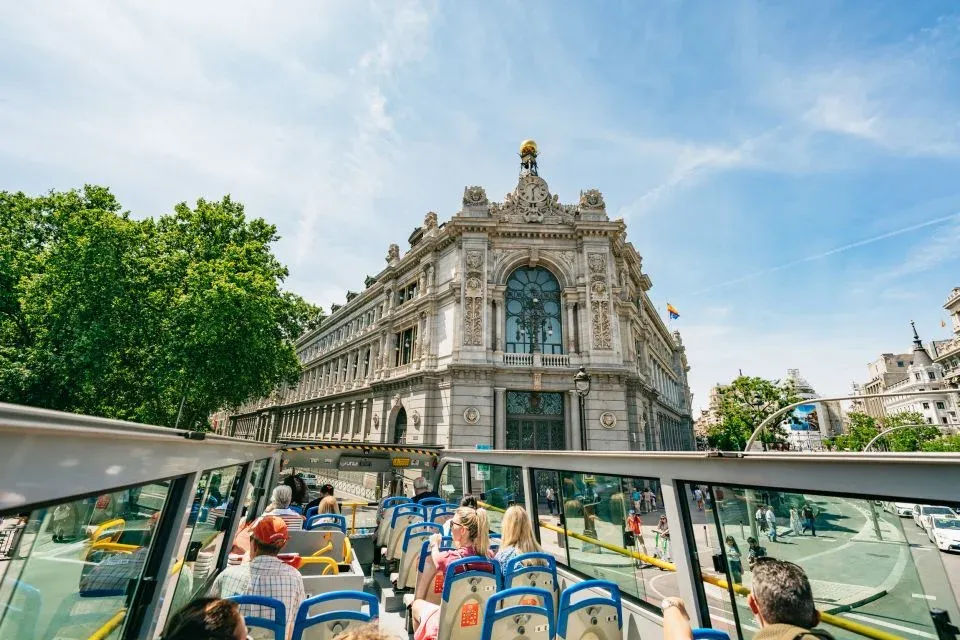
The upper deck is particularly useful for seeing the city's grand boulevards, monuments and buildings from a different perspective. The journey itself becomes part of the sightseeing experience rather than simply a means of transportation.
The bus can also help preserve energy for the places where walking really matters. Spending two or three hours inside the Prado Museum requires concentration, while exploring the Royal Palace or Retiro Park is more enjoyable when you are not already exhausted from walking across the city.
However, a Madrid sightseeing bus should not replace walking. Madrid's historic squares, side streets, museum districts and neighbourhoods are best experienced at street level.
Think of the journey as:
Ride between major areas → hop off → explore deeply → rejoin the route.
Madrid Hop On Hop Off Route at a Glance
Stop / Area | Main Attraction | Recommended Time |
Plaza de Oriente / Royal Palace | Royal Palace & Almudena | 2–3 hrs |
Plaza Mayor | Historic Madrid | 30–45 min |
Gran Vía | Architecture & shopping | 45–60 min |
Cibeles | Monumental Madrid | 20–30 min |
Prado / Paseo del Prado | Prado Museum | 2–3 hrs |
Retiro | Park & Crystal Palace | 1–2 hrs |
Reina Sofía | Modern Spanish art | 1.5–2 hrs |
Thyssen-Bornemisza | European art | 1.5–2 hrs |
The table is designed for planning rather than suggesting that every attraction sits directly beside a bus stop. Some landmarks require a short walk after hopping off.
Exact stop names and route order can vary by operator and route, so travellers should check the current route map before departure. Current Madrid City Tour information describes three routes, with the Historic Madrid route connecting important areas around the Royal Palace and Paseo del Prado, while other routes extend into modern and contemporary parts of the city.
For a first visit, focus on the areas that best match your interests rather than trying to use every stop.

Stop 1 — Royal Palace and Almudena Cathedral: Begin with Madrid's Royal Story
The Madrid Royal Palace is the natural starting point for a sightseeing day focused on royal history. Standing beside Plaza de Oriente, the palace is one of Madrid's most recognisable landmarks and provides an impressive introduction to the city's royal past.
Rather than simply taking photographs outside, allow enough time to explore the interior if the palace is one of your main priorities.
Royal Palace of Madrid
The Royal Palace is a historic royal residence known for its monumental architecture and lavish interiors. Inside, visitors can explore grand state rooms, historic collections and spaces connected with Spain's monarchy.
Among the highlights are the palace's state rooms, the Royal Armoury and the surrounding gardens. The scale of the building means that rushing through it can make the visit feel more like a checklist than a genuine sightseeing experience.
Allow approximately 2–3 hours if you intend to visit the interior properly.
The palace's surroundings are also worth exploring. Plaza de Oriente provides open space and attractive views toward the palace, making it a good place to pause before continuing into central Madrid.
Almudena Cathedral
Just beside the palace stands Almudena Cathedral, creating an easy pairing for visitors interested in Madrid's architectural and religious history.
The cathedral's Neo-Gothic exterior gives it a distinctive appearance, while the interior and crypt offer another perspective on the city's history. Visitors can also look for viewpoints around the cathedral and surrounding area.
Because the cathedral and Royal Palace are so close, combining them makes more sense than treating them as separate journeys.
Plaza de Oriente
After visiting the palace, slow down around Plaza de Oriente. The square is a pleasant transition between Madrid's royal quarter and the busier streets of the historic centre.
Practical tip: If the Royal Palace is a priority, make it an early stop and reserve admission ahead of time where required. That gives you more flexibility for the rest of your Madrid bus tour.
From Royal Madrid to the Historic Centre — Plaza Mayor, Puerta del Sol and Gran Vía
After exploring the royal quarter, continue toward the historic centre. This part of the route shows how Madrid changes from royal architecture to lively public squares, shopping streets and modern urban landmarks.
Plaza Mayor
Plaza Mayor is one of Madrid's most famous historic spaces. Its large rectangular design, surrounding arcades and historic architecture create a strong sense of the city's Habsburg-era past.
The square is a natural place to pause, take photographs and explore the surrounding streets. Cafés and restaurants around the area make it convenient for a short break before continuing.
From here, you can walk toward other parts of Madrid's old centre rather than immediately returning to the bus.
Puerta del Sol
Puerta del Sol represents a much busier side of central Madrid. It is one of the city's best-known meeting points and is home to the famous Kilometer Zero marker, which traditionally represents the starting point for measuring Spain's major roads.
The Bear and Strawberry Tree statue is another recognisable Madrid landmark.
Unlike Plaza Mayor's enclosed historic atmosphere, Sol feels energetic and intensely urban, with pedestrians constantly moving through the square.
Gran Vía
Gran Vía shifts the story again. Its impressive theatre façades, shops, restaurants and urban skyline represent modern Madrid while still retaining a strong architectural identity.
During the evening, the street becomes particularly atmospheric as theatres, restaurants and illuminated buildings bring the area to life.
This is one of the reasons a Madrid sightseeing tour works well here: the route does not simply connect individual attractions. It moves through different chapters of Madrid's development, from royal Spain and the Habsburg centre to the city's modern commercial heart.
Paseo del Prado: Where Madrid Becomes an Open-Air Art District
The transition from central Madrid to Paseo del Prado marks the beginning of the city's great museum district.
The Paseo del Arte, or Art Walk, brings together three internationally important museums along a relatively concentrated stretch: the Prado, Thyssen-Bornemisza and Reina Sofía. This makes the area one of the most important cultural zones in Madrid.
But the Paseo del Prado is more than a collection of museums.
As you explore the area, look for Plaza de Cibeles, the Fuente de Neptuno and the Royal Botanical Garden. The broad avenues, fountains, monuments and landscaped spaces make the journey between museums part of the experience.
The Prado area also provides access to Retiro Park, giving visitors an opportunity to move from art and architecture into open green space.
This section of your Madrid Hop On Hop Off route should therefore be treated as a walking-and-museum experience rather than simply a quick bus stop.
If you have already spent the morning exploring the Royal Palace and historic centre, the Paseo del Prado provides a natural change of pace.
Prado Museum: The Essential Stop for Classical Art Lovers
For many visitors, the Prado Museum Madrid is the artistic highlight of the entire trip. Its collections are closely connected with the history of Spanish and European painting and include works by some of the most influential artists in Western art.
Why the Prado Matters
The museum is particularly important for Spanish masters such as Diego Velázquez and Francisco Goya, while its wider collection includes major works from Italian and Flemish traditions.
Visitors can encounter works associated with artists including:
Diego Velázquez
Francisco Goya
El Greco
Hieronymus Bosch
Peter Paul Rubens
Among the museum's most famous works are Velázquez's Las Meninas and Goya's The Third of May 1808.
The sheer scale and quality of the collection mean that trying to see everything in one visit is unrealistic for most travellers.
How Long Should You Spend at the Prado?
Your ideal visit depends on your interest in art:
90 minutes: Focus on major highlights.
2–3 hours: A worthwhile first visit with time for a broader selection.
Half a day: Better suited to serious art enthusiasts.
For most travellers following a wider Madrid itinerary, around two to three hours provides a reasonable balance.
Prado + Hop-On Hop-Off Planning Tip
Avoid scheduling another major museum immediately after the Prado.
Instead, use the surrounding area to slow down. Have lunch, walk along the Paseo del Prado, visit Retiro Park or simply sit somewhere and take a break before continuing your sightseeing.
This approach makes your Madrid Hop On Hop Off day feel much more manageable.
The Art Triangle: Prado, Thyssen and Reina Sofía
The three major museums around the Paseo del Arte form what is commonly known as Madrid's Art Triangle. Together, they offer an extraordinary journey through different periods and styles of European and Spanish art.
Prado Museum
Best for: Classical European and Spanish masters.
The Prado is the strongest choice for travellers interested in historic European painting and Spanish masters. Velázquez, Goya, El Greco, Bosch and Rubens are among the names that make this museum particularly significant.
Thyssen-Bornemisza Museum
Best for: A broad chronological journey through European painting.
The Thyssen offers a different experience from the Prado, with collections covering a wide range of periods and styles.
Its works extend from earlier European painting into modern art, with artists including Canaletto, Gauguin, Kandinsky and Hopper represented in the collection.
For visitors who want to understand how European painting changed over several centuries, the Thyssen is an excellent choice.
Reina Sofía
Best for: Modern Spanish art.
The Reina Sofía provides the strongest contrast with the Prado. Instead of concentrating on old masters, it focuses on modern and contemporary Spanish art.
Its headline attraction is Picasso's Guernica, one of the most recognisable works of 20th-century Spanish art. The museum also features works associated with Salvador Dalí, Joan Miró and Juan Gris.
Art Museum Comparison
Museum | Best For | Suggested Visit |
Prado | Classical masterpieces | 2–3 hrs |
Thyssen | European art across periods | 1.5–2 hrs |
Reina Sofía | Modern Spanish art | 1.5–2 hrs |
For first-time visitors, don't feel pressured to explore all three museums in one day. Their collections are extensive, and trying to experience everything can turn a great cultural itinerary into a rushed checklist.

Retiro Park: Add Green Space Between the Museums
After several hours surrounded by paintings, galleries and historic architecture, Retiro Park provides exactly the kind of change of environment that a busy Madrid itinerary needs.
The park contains tree-lined paths, gardens, monuments and open spaces where visitors can slow down.
The Crystal Palace is one of the park's most recognisable structures, while the Retiro lake offers another popular place to pause. The Monument to Alfonso XII provides an impressive focal point overlooking the water.
Instead of treating Retiro as another attraction to rush through, use it as a break.
A simple sequence works well:
Museum → lunch → Retiro walk → bus → next attraction
rather than:
Museum → museum → museum → museum.
The Prado-area sightseeing stops also make Retiro convenient to incorporate into a broader Madrid sightseeing tour.
Families may particularly appreciate the change of pace, while couples can use the gardens and paths for a slower afternoon experience.
The Best Madrid Hop On Hop Off Stops for Palace and Art Lovers
Stop / Area | Why Visit | Best For |
Royal Palace | Royal rooms & architecture | History lovers |
Plaza Mayor | Historic Madrid | First-timers |
Gran Vía | Architecture & entertainment | Couples / shoppers |
Cibeles | Monumental Madrid | Photographers |
Paseo del Prado | Art Triangle | Art lovers |
Prado | Classical masterpieces | Culture |
Retiro | Gardens & relaxation | Families |
Reina Sofía | Guernica & modern art | Modern-art fans |
These Madrid Hop On Hop Off stops offer different experiences, so your ideal route depends on what you want from the day.
If this is your first visit, Royal Palace, Plaza Mayor, Prado and Retiro provide a balanced combination of history, architecture, art and relaxation.
Art enthusiasts can devote more time to Paseo del Prado and the three major museums, while photographers may prefer Cibeles, Gran Vía and the palace area.
The Ultimate One-Day Madrid Hop-On Hop-Off Itinerary
9:00 AM — Start Near the Historic Centre
Begin early and board the sightseeing bus. Use the first section of the route to orient yourself and enjoy views of Madrid before your first major stop.
9:30 AM — Royal Palace
Hop off around the Royal Palace and begin your royal-history experience.
Explore the palace and Almudena Cathedral, allowing approximately two hours if you plan to enter the palace.
12:00 PM — Plaza Mayor
Continue toward Plaza Mayor and explore Madrid's historic centre.
Take time to appreciate the architecture and surrounding streets before stopping for an early lunch.
1:00 PM — Gran Vía
Continue toward Gran Vía to experience one of Madrid's most recognisable modern streets.
Look at the historic façades, theatre buildings and urban skyline before moving toward the Paseo del Prado.
1:45 PM — Prado Museum
Spend approximately two hours exploring the museum's highlights.
Focus on the works that interest you most rather than trying to see every gallery.
4:00 PM — Retiro Park
After the Prado, head toward Retiro Park for a change of scenery.
Walk around the gardens, see the Crystal Palace or spend time near the lake.
5:30 PM — Choose Your Art Finish
At this point, choose one additional museum rather than attempting both.
Option A: Reina Sofía — Best if you want modern Spanish art and Picasso's Guernica.
Option B: Thyssen-Bornemisza — Better if you prefer a broader European art collection.
7:00 PM — Cibeles / Gran Vía
Finish your sightseeing around Cibeles or Gran Vía and enjoy Madrid's evening atmosphere.
8:00 PM — Dinner
End the day with dinner in the central area rather than trying to squeeze in another major attraction.
This itinerary deliberately leaves breathing room. A successful Madrid bus tour is not about seeing the maximum number of stops; it is about using the route to make your time between major experiences easier.
A Two-Day Version for Serious Art and History Lovers
If you have two days, Madrid becomes considerably easier to enjoy.
Day 1 — Royal Madrid
Start with:
Royal Palace
Almudena Cathedral
Plaza de Oriente
Plaza Mayor
Puerta del Sol
Gran Vía
Temple of Debod
This day focuses on Madrid's royal history, historic centre and architecture.
Day 2 — Art Madrid
Dedicate the second day to:
Prado Museum
Paseo del Prado
Retiro Park
Thyssen-Bornemisza
Reina Sofía
The major advantage is flexibility. You can spend several hours at the Prado without worrying that you are sacrificing your chance to see the Royal Palace.
You can also explore Retiro at a slower pace and select the museum that most closely matches your interests.
A two-day plan dramatically improves the experience because you are not forced to rush through major collections.

Should You Visit All Three Art Museums in One Day?
Technically yes, but generally no.
The three museums are close enough geographically that visiting all of them is possible. The problem is the amount of time and concentration involved.
Three museums can easily consume 5–7 hours, depending on how deeply you explore each collection. By the end of the day, museum fatigue becomes a genuine problem.
The Prado alone deserves several hours for many visitors. Adding the Thyssen and Reina Sofía afterward can make the experience feel more like checking locations off a list than appreciating the art.
For a balanced first visit, choose two museums maximum.
Visit all three only if art is the primary reason for your trip and you are comfortable dedicating most of the day to museums.
For everyone else, combine one or two museums with Madrid's streets, parks, architecture and food.
Madrid Hop-On Hop-Off vs Walking and Metro
Option | Best For | Main Advantage |
Hop-On Hop-Off | First-time sightseeing | Views + flexibility |
Walking | Historic centre | Hidden streets |
Metro | Fast transport | Speed |
Taxi | Door-to-door travel | Convenience |
Each option has a different role.
A Madrid Hop On Hop Off service works particularly well when you want to see the city while moving between major sightseeing zones. It combines transportation with sightseeing and provides a broader view of Madrid's architecture.
Walking is better once you are inside a particular area. The historic centre, Plaza Mayor and Paseo del Prado all reward exploration at street level.
The Metro is the practical choice when your priority is simply reaching another part of Madrid quickly. A taxi can be useful when convenience matters more than sightseeing.
The simplest strategy is:
Use HOHO between sightseeing zones, walk inside each zone, and use the Metro when you simply need to get somewhere quickly.
Best Time to Follow Madrid's Palace and Art Route
Timing can make a major difference to this itinerary.
Morning: Start with the Royal Palace while your energy is high.
Late morning/early afternoon: Move toward the Prado and spend several hours exploring the collection.
Afternoon: Use Retiro Park as a break after your museum visit.
Late afternoon: Choose either Reina Sofía or Thyssen-Bornemisza depending on your interests.
Evening: Finish around Cibeles or Gran Vía.
Madrid's summer heat can make extended midday walking uncomfortable, so using the bus between areas can be particularly helpful during warmer months. Carry water and avoid planning long outdoor walks during the hottest part of the day.
Museum crowds can also influence your schedule. Weekdays may offer a different atmosphere from weekends, while holidays and major events can increase visitor numbers.
Most importantly, check current route information before departure. Operating schedules and stop arrangements can change, including temporary changes caused by roadworks or city events.
Practical Tips for a Madrid Hop On Hop Off Art and Palace Tour
A little preparation can make a major difference to your sightseeing day.
Reserve museum time slots when available. Major attractions can become busy, particularly during popular travel periods.
Start early. Beginning around 9:00 AM gives you more flexibility and reduces the pressure later in the day.
Don't plan three major museums plus the palace in one day. The attractions deserve more time than a rushed schedule allows.
Wear comfortable shoes. Even when using a bus, you will spend significant time walking inside museums, around squares and through historic streets.
Carry water during warmer months. Madrid can become hot, particularly during summer.
Use the upper deck for architecture and photography. The journey itself can provide excellent views of Madrid's major boulevards and buildings.
Keep museum visits flexible. If you become particularly interested in one collection, allow yourself to stay longer rather than immediately rushing to the next stop.
Check the route before boarding. Confirm the current stop locations, direction and operating schedule.
Leave buffer time between attractions. Walking, queues, museum security and unexpected delays can all affect your schedule.
Finally, remember that the bus is more than transportation. Use the ride to see Madrid between attractions rather than simply treating it as a way to save a few minutes.
Best Route for Different Types of Travellers
First-Time Visitors
Royal Palace → Plaza Mayor → Prado → Retiro
This provides the best balance of Madrid's royal history, historic centre, classical art and green spaces.
Art Lovers
Prado → Thyssen → Reina Sofía
Choose this route if museums are the primary reason for your trip. Ideally, spread it over two days.
History Lovers
Royal Palace → Almudena → Plaza Mayor → Paseo del Prado
This combines royal, religious, Habsburg-era and cultural history.
Families
Royal Palace → Gran Vía → Retiro → Temple of Debod
This route balances major landmarks with outdoor spaces and a more varied sightseeing experience.
Couples
Royal Palace → Paseo del Prado → Retiro → Cibeles → Gran Vía
The combination of architecture, museums, gardens and evening city views creates a relaxed itinerary for couples.
Short-Stay Travellers
Royal Palace → Prado → Retiro → Gran Vía
If your time is limited, concentrate on four contrasting experiences rather than attempting every major attraction.
Frequently Asked Questions
Is Madrid Hop On Hop Off worth it?
Yes, particularly for first-time visitors who want to see several major areas without spending the entire day walking or navigating public transport. It is especially useful for connecting the historic centre with the Paseo del Prado and other sightseeing zones.
Which Hop On Hop Off Madrid route goes to the Royal Palace?
The Historic Madrid route covers the Royal Palace area. However, routes and stop arrangements can change, so check the current operator map before travelling.
Which Madrid Hop On Hop Off stop is best for the Prado Museum?
The Prado/Paseo del Prado area is the most convenient choice for visiting the Prado Museum. It also provides access to the wider Art Triangle and nearby Retiro Park.
Can you visit the Prado, Reina Sofía and Thyssen in one day?
Technically, yes, because the museums are relatively close together. However, it is generally not recommended for first-time visitors. Seeing all three can take most of the day and may leave little time for Madrid's streets, parks and other attractions.
How long should I spend at the Royal Palace of Madrid?
Allow approximately 2–3 hours if you want to explore the palace interior properly. Visitors who only want exterior photographs and the surrounding area can spend considerably less time.
Does the Madrid Hop On Hop Off bus stop near Retiro Park?
The Madrid sightseeing routes provide access to the Retiro/Paseo del Prado area. Because exact stop arrangements can change, check the current route map and stop information before your visit.
Is the Royal Palace included in the Hop On Hop Off ticket?
The sightseeing bus ticket and Royal Palace admission are generally separate unless you specifically purchase a combination ticket that states otherwise. Always check the inclusions of your particular ticket before booking.
What is the best Madrid Hop On Hop Off itinerary for one day?
For a balanced first visit, start with the Royal Palace and Almudena Cathedral, continue through Plaza Mayor and Gran Vía, then explore the Prado Museum, take a break in Retiro Park, and finish with either the Reina Sofía or Thyssen-Bornemisza before ending around Cibeles or Gran Vía.
Final Verdict: The Best Way to See Madrid's Royal and Artistic Sides
Madrid is at its best when you combine its different personalities rather than focusing on only one type of attraction.
A Madrid Hop On Hop Off route provides an efficient framework for connecting the city's royal landmarks, historic centre and major museum district. Begin with the Royal Palace and Almudena Cathedral, explore Plaza Mayor and Gran Vía, then move toward the Paseo del Prado for the Prado Museum and Retiro Park.
If you have another day, add the Thyssen-Bornemisza and Reina Sofía to experience more of Madrid's artistic depth.
The key is not to turn the journey into a race between attractions. Use the bus for orientation, views and connections, then slow down when you reach each sightseeing zone.
Ride between the major areas, explore each one on foot, and give Madrid's royal history, world-class art and everyday streets enough time to make the experience memorable.


Comments